If you're looking for a zoo in Foz do Iguaçu, you should know that the old-fashioned kind many people imagine no longer exists.
Today, some venues have evolved, and what you’ll find in Foz are experiences that are much more hands-on, educational, and designed with the animals’ well-being in mind. Eco Park Foz is one such place, and that’s what we’re going to talk about today.
Find out how the tour works, what you’ll see there, and why this tour is usually so popular.
Is Eco Park Foz a zoo?
Yes, Eco Park qualifies as a zoo. Under Brazilian law, a zoo is any facility that keeps wild animals in human care and is open to the public.
But what you’ll find here is a far cry from that image of animals isolated in captivity, without proper food and in unstimulating, unnatural environments.
For a long time, these places existed primarily to display animals. Today, at places like Eco Park, the focus has shifted: the welfare of the animals comes before the visitor experience.
The park is designed as a modern zoo, where:
- the focus is on the animals;
- there is concern about natural behavior;
- the environment avoids artificial and sterile structures;
- Visitors embark on a learning journey.
Beyond the visit itself, there is a lot of work behind the scenes. Eco Park participates in initiatives such as the Onças do Iguaçu project, aimed at preserving the largest population of jaguars in the Atlantic Forest.
How many animals are there at Eco Park Foz, and where do they come from?
Eco Park Foz is home to more than 200 animals, but what really stands out isn't just the number.
Many of them arrived at the park after experiencing situations such as trafficking, abuse, or accidents. From there, they undergo a rehabilitation process. Once they are able to readjust, they can be released back into the wild. When that is not possible, they remain in our care.
It is from this point on that the tour takes on a whole new meaning. Eco Park has been taking on the role of a zoo, but with a different approach, one that is more in line with today’s expectations.
As you walk through the space, you’ll come to understand how this relationship between humans and animals has developed over time. At times, this is presented in a lighthearted way; at others, it gives you pause for thought.
What to see and do at Eco Park Foz?
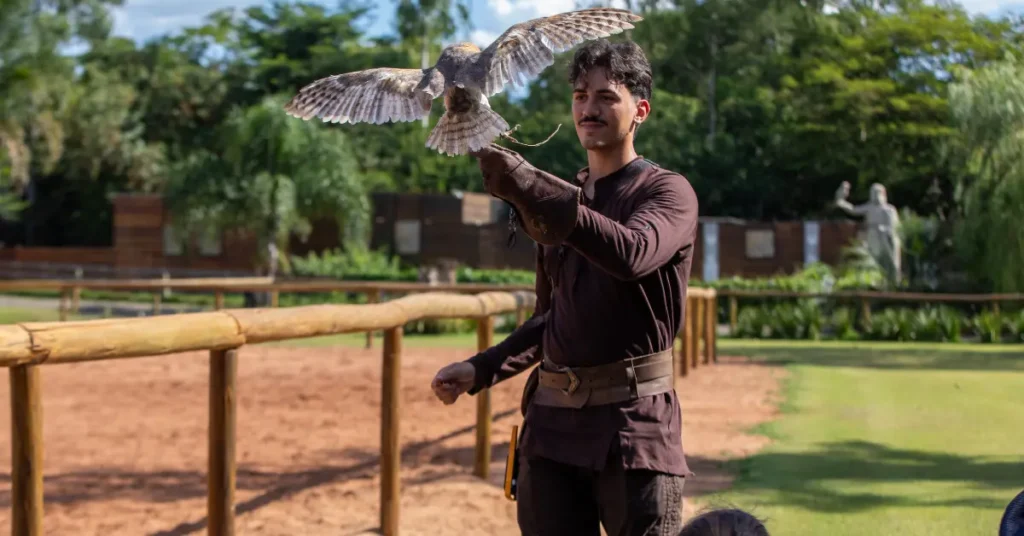
Falconry Center
Eco Park Foz is home to Brazil’s only falconry center, where the park’s main attraction takes place: the Birds of Prey Flight Show.
You’ll watch birds of prey soar through the sky, inspired by the ancient practice of falconry. This practice has ancient origins and is part of a tradition recognized by UNESCO as part of humanity’s cultural heritage.
During the flight, the crew explains the behavior of the species and the role they play in nature.
- Times: 10:30 a.m. and 4:00 p.m.
- Average duration: 20 to 30 minutes
- Recommended age: all ages
Owl Moment
During "Owl Time," visitors get to see the owl up close, guided by environmental educators. This close-up experience usually captures the attention of both children and adults.
They explain how these birds live, how they hunt, and why they are so important to the balance of nature. At the same time, they take this opportunity to debunk popular myths—those ideas that many people still hold about owls.
Visitors also learn about the animals’ own stories. There are owls in the park that were rescued after being abused and are now unable to return to the wild, which adds another layer to the experience.
- Times: 9:00 a.m. and 3:30 p.m.
- Average duration: 10 to 15 minutes
- Recommended age:all ages
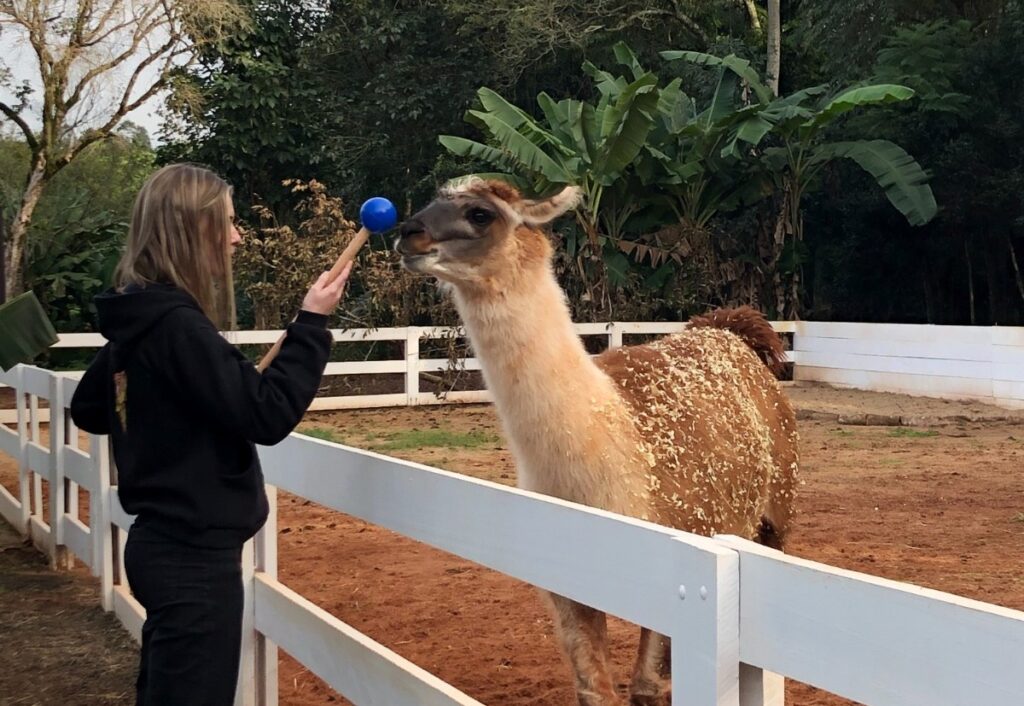
Little Farm
The Little Farm is one of the most peaceful spots in Eco Park, especially for those with children.
Here, children can get a close-up look at giant rabbits, goats, cows, sheep, and other animals. The aim is to help them understand how these animals have been part of the history of human interaction and the development of society itself.
Another key factor is the care taken in how this interaction takes place. There are activities led by educators, including feeding the animals, which helps make the experience both safer and educational.
- Hours: flexible
- Average duration: 30 to 40 minutes
- Recommended age: all ages
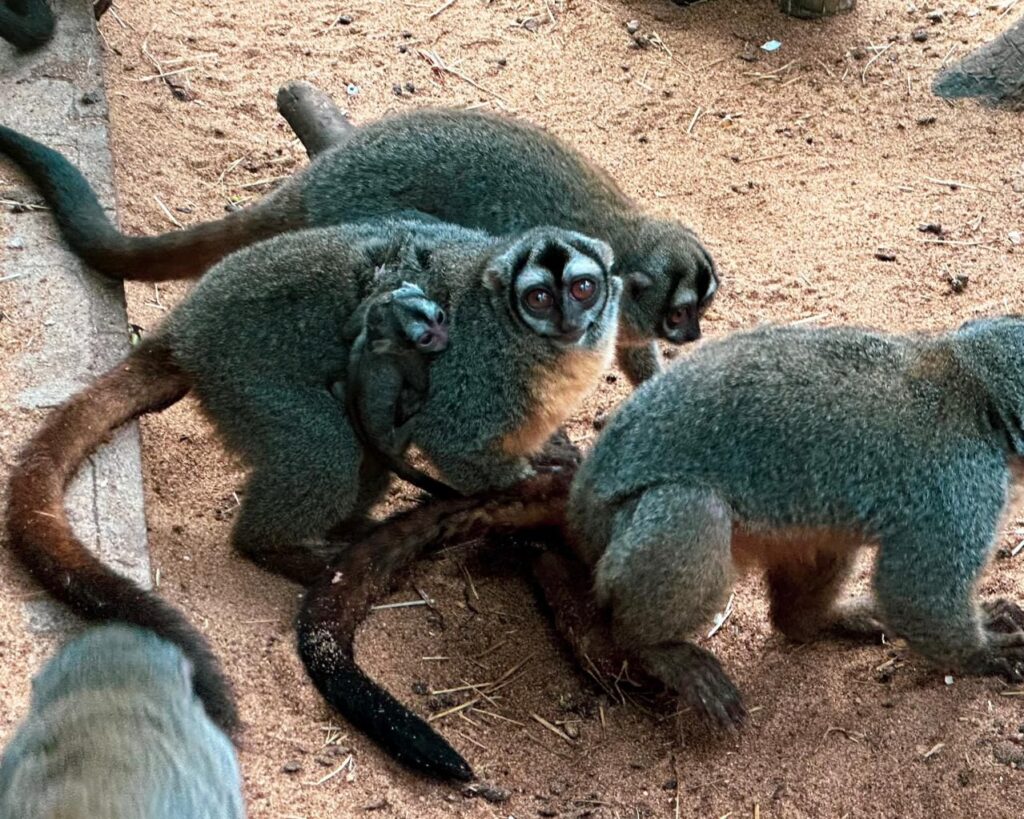
Primate Forest
The Primate Forest is Brazil's first and only immersive monkey enclosure.
As you walk through the exhibit, you can observe how the primates move, interact with one another, and occupy the space.
Many of these animals were rescued from situations such as trafficking or abuse and can no longer be released back into the wild. This helps explain why they are there and how this type of facility contributes to the care and conservation of these species.
- Hours: flexible
- Average duration: 20 to 30 minutes
- Recommended age: all ages
Melipona apiary
The Meliponary is a space dedicated to Brazilian stingless bees, known as Meliponini. In Brazil, there are more than 250 species, and all play an important role in maintaining environmental balance.
During the visit, you’ll observe various native species in specially adapted hive structures, which allow you to see how they live and organize themselves. You’ll gain an understanding of how colony dynamics work and how these bees interact with their surroundings.
Since they don’t have stingers, interacting with them is safe, making this a great place to enjoy with children.
- Hours: flexible
- Average duration: 10 to 20 minutes
- Recommended age: 5 to 10 years old
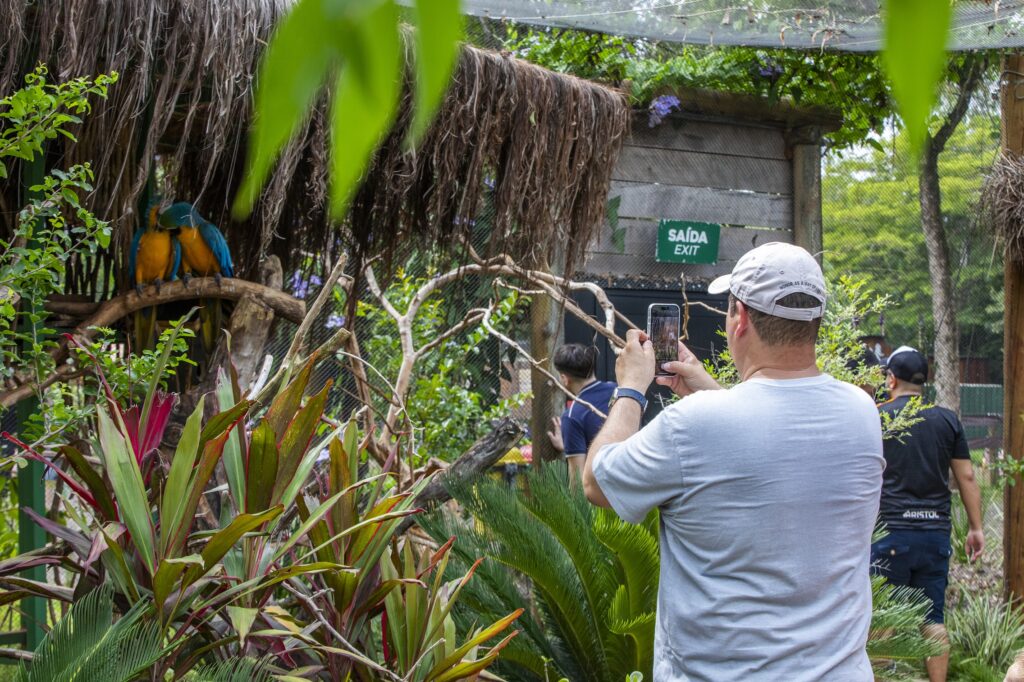
Bird immersion pen
The bird rehabilitation center houses various species that could not be released back into the wild due to situations such as abuse or other forms of harm.
It's a place where you can see birds such as parakeets and parrots, as well as other animals like turtles and tortoises.
The exhibit shows what happens after the rescue. Some animals are able to recover and return to the wild, while others remain in permanent care. The park takes on this role when a return to the wild is not possible.
This interaction helps us better understand the impact of these situations and the role that such areas play in species conservation.
👉See also: Eco Park Foz resumes paddleboat tours and Ecoelho events
Frequently Asked Questions About the Zoo in Foz do Iguaçu
Yes, Foz do Iguaçu is one of the few cities in Brazil with three different modern zoos: Parque das Aves, Refúgio Biológico Bela Vista (Itaipu), and Eco Park Foz.
The tour usually lasts between 2 and 3 hours, depending on the pace. Since the sites are close together and the route is easy, you can really enjoy it without getting tired, even with children.
It’s not required, but it can help with planning the trip, especially during peak seasons.
The two parks offer different experiences. Parque das Aves is geared more toward birdwatching, with a focus on bird species. Eco Park, on the other hand, offers a more varied experience, featuring different environments and opportunities for interaction, as well as a highlight on falconry.
Yes, it’s one of the most relaxing outings in the city for this age group. The trails are short, there’s plenty of shade, and the activities keep the kids engaged without requiring too much physical effort.
Make sure to visit Eco Park Foz
If you've come this far looking for a zoo in Foz do Iguaçu, now you know: the experience has changed—and for the better.
When planning your itinerary, this is one of the easiest excursions to fit in—and also one of the most surprising for those traveling with children.
Be sure to visit Eco Park Foz and turn this moment into a modern, educational, and meaningful experience for the whole family.